NEWS: TRANSPORTATION
A Conversation with Kaan Gunay, Co-Founder and CEO of Firefly.
In short, Firefly is a smart city media network. We connect people, governments, and businesses to help build intelligent, safe and sustainable cities.
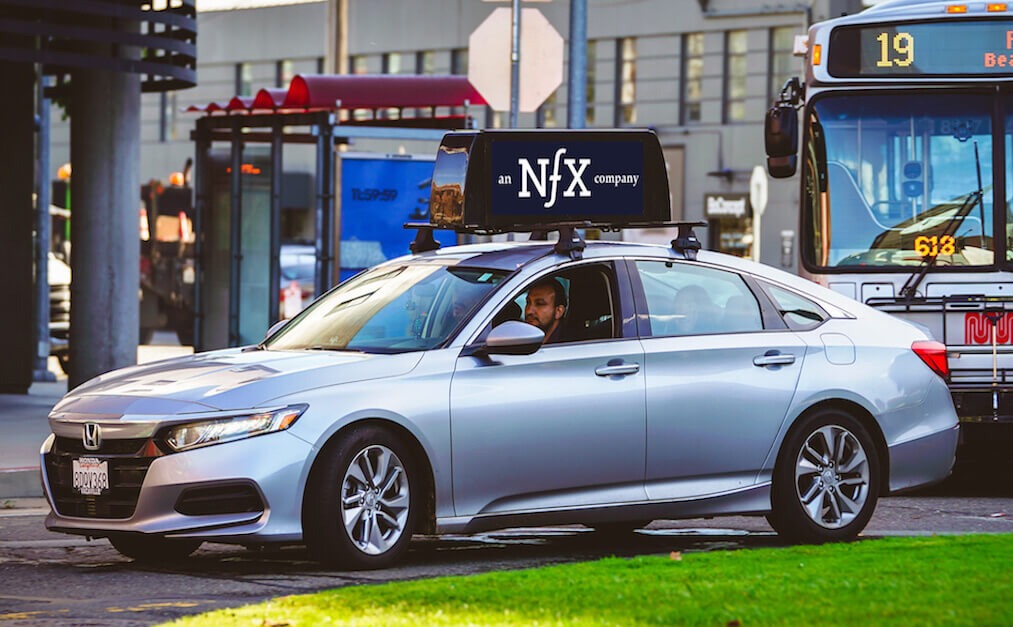
To do this, we leverage existing networks of rideshare vehicles and install our proprietary media displays atop their cars. These screens deliver geo-targeted advertising based on driver routes and location, delivering the right message at the right time for highly effective campaign-engagement. By partnering directly with drivers we’ve been able to boost their income on average 20 percent.
In addition to the technology, what sets us apart is our community-first commitment. This manifests itself in different ways. At least 10 percent of our entire advertising inventory at any given time is dedicated to local not-for-profit organizations, public sector PSAs and other non-commercial entities such as charities, advocacy groups, and community organizations.
Outside of advertising, we knew that our proprietary technology could help reveal other pressing concerns about city life. That’s why we work hand in hand with local governments and share traffic and air quality data to help paint a better picture of what’s really happening in a city.

I’m lucky to have earned both an education of both the head and the heart and Firefly is the fruit of these studies.
My technical and business acumen comes from a deep familiarity with the space. I have a mechanical engineering degree from Brown and later on I became a researcher at its school of engineering. While I enjoyed pure research, I knew in my heart that I wanted to have a more immediate impact on the world. That’s why I earned an MBA from Stanford and began working in the world of venture capital – to learn how best to build and scale businesses.
Alongside this, I began working with refugees of the Syrian Civil War and Habitat for Humanity. As much as anything else, this was crucial to forming my belief in the absolute need for purpose-driven companies that sustainably uplift the people and communities they touch.
First, we’re improving the ability of businesses of all kinds – including those traditionally locked out from powerful advertising campaigns like nonprofits and small local businesses – to super effectively reach the people who matter to them. In this way, we’re connecting consumers and businesses and promoting economic growth. For instance, the Coalition of Clean Air ran a campaign with us that ultimately received 2.9 million impressions and over 1,000 hours of exposure. This sort of thing wasn’t possible for them before with static billboards and screens.
We also work hand-in-hand with municipal governments to provide valuable data. In partnership with the Clean Air Coalition and PurpleAir, we ran an integrated pilot program measure air quality, testing demo vehicle installed with PurpleAir sensors to monitor air quality via its vehicles. This was especially significant during p the devastating wildfires and resulting hazardous air quality in the Bay Area late last year, and that data was leveraged by the Coalition for Clean Air in its efforts to provide relief to citizens and help to make significant planning decisions for the city during the fires.
Flying cars may not yet be here, but in many ways, we’re already seeing elements of smart cities take hold and transform the way we live in them. Having seen the rapid evolution of booming urban areas across the country, I see a future powered by platforms like Firefly — in the cities of tomorrow, I believe transportation will be subsidized by media platforms like ours, that are able to simultaneously generate revenue while also providing a valuable service to municipalities.