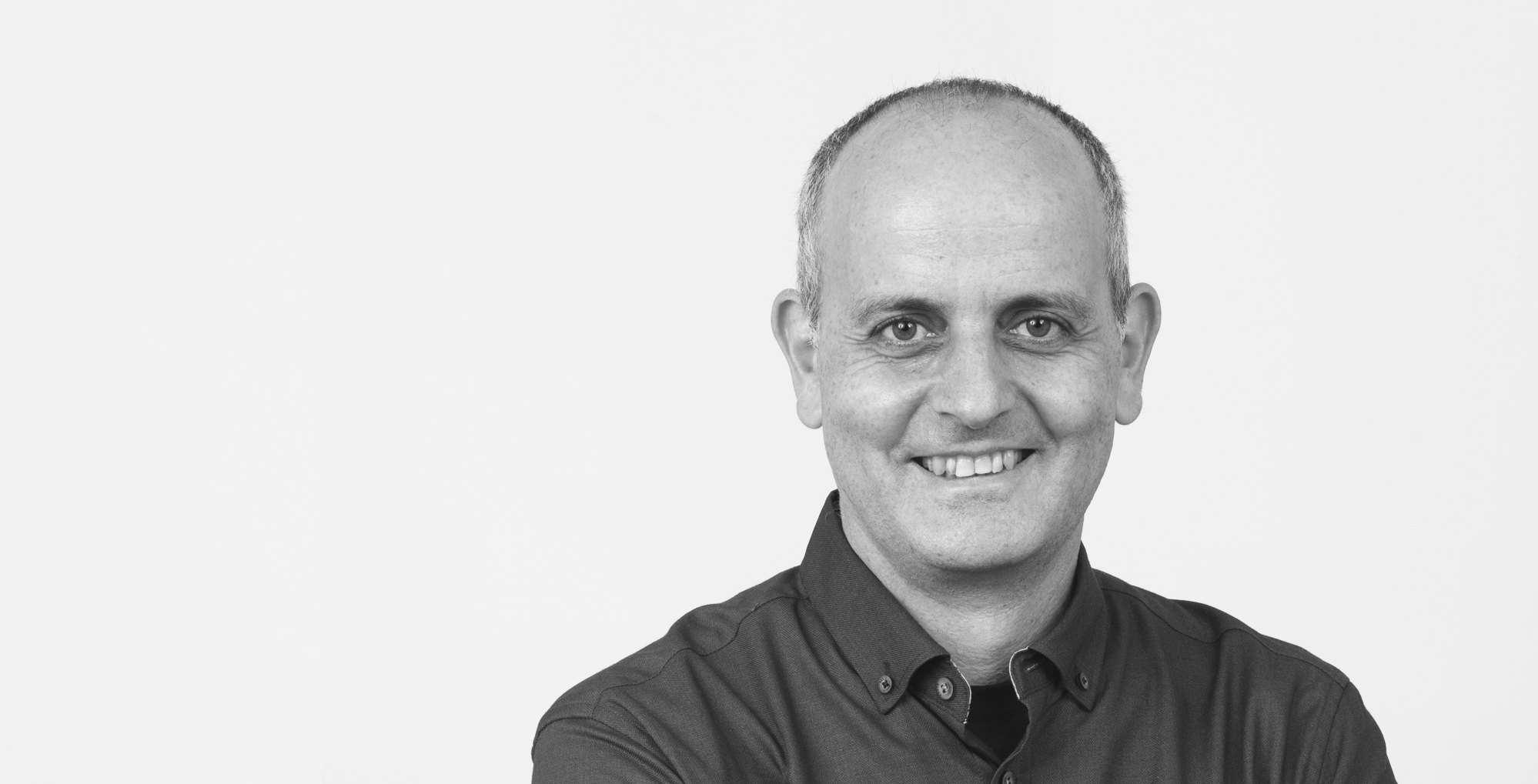
INTERVIEW: TUVIK BEKER, PHD
Downturns: How to Survive and Thrive
Lessons from building and leading startup companies for 20+ years.
A conversation with Tuvik Beker, PhD - CEO of Pangea Biomed
In this edition of MASH (Marketing Advice for Startups in Healthcare), we sat down with Tuvik Beker, the CEO of Pangea Biomed, a startup building an algorithmic platform called ENLIGHT to democratize precision oncology. Before joining Pangea, Tuvik founded and led a number of startups, including MedAware, Katros, and Soligence.Tell us about the story of Pangea and how you became involved in the company. Today, Eytan Ruppin is Chief of the Cancer Data Science Lab at the NCI, Ze'ev Ronai is Director of the NCI-Designated Cancer Center at Sanford Burnham Prebys, and Eyal Gottlieb is VP for Research at MD Anderson Cancer Center. In 2018, they co-founded Pangea Biomed. When they set out to bring Pangea’s algorithmic platform, ENLIGHT, to market, Eytan tapped Ranit Aharonov and I – his first and second Ph.D. students – to lead this phase of development. Alongside Dr. Eyal Schiff, Dr. Emmanuel Elalouf, and Gal Dinstag, our team began to shape the innovative groundwork set by our co-founders to democratize access to precision oncology. Today, we’ve made great progress in advancing ENLIGHT, the most advanced pan-cancer, pan-treatment patient response predictor. Having joined Pangea after Eytan, Eyal, and Ze’ev co-founded the company, what advice would you have for other leaders joining the early stages of a company that’s already developed its foundational technology? Pangea is the first company where I was not on the core founding team from day one. I didn’t immediately have the deep sense of ownership I’m used to at the start, but I had to be part of it. To others in this position, I say: (1) Find what you love about the technology (2) Put your pride aside and be willing to take direction from others (3) Ask many questions (4) Build upon the technology when possible to find ownership in your contributions. With time, more and more beautiful technology and science has been built on top of the original ingenious ideas, and the whole Pangea team is part of this new creation and shares ownership of it. You come from a deep background in machine learning and computational biology. When talking to investors, how do you think about avoiding being too technical while also avoiding high-level messaging that downgrades Pangea’s uniqueness in a crowded field? Storytelling is essential to entrepreneurship, and by balancing technical details and the big narrative, you can make a strong case for your distinction in the market. Ask yourself, “What’s the real essence of what we do? What’s at the core, and what are just implementation details?” If a potential investor doesn't have the background to understand your solutions, they'll call in others to review materials, notes from the pitch, and other info on your company. So, never "dumb down" anything to the point where someone from your own field wouldn't recognize your product’s value, and don’t be afraid to go into technical specifics as long as you explain how those details play into the big picture and are critical for long term success. This year, biotech investment saw a significant downturn. What would your advice be to other founders who are trying to reassure investors that their technology is viable post-downturn? To reassure investors that the company is going to make it to the other side, increase your runway with less spend and more revenue. It’s simple, but not easy. - If you are in a pre-revenue stage, identify the downturn early on and be fanatic about keeping the burn rate as low as possible. An overnight switch from a growth mindset to a survival mindset is extremely tough, but essential. - If you are generating revenues, be very cautious on the spend side while doubling down on increasing revenues. Obtaining revenue-generating deals should be your number one, two and three priorities. Downturns present opportunities for those that navigate them wisely. Strong investment cycles make it hard to distinguish good ideas from hype inflated by investor and founder greed; downturns surface companies that create true value through superior technology. What role do you see case studies playing in your ability to demonstrate the potential impact of Pangea’s technology on patient outcomes? At the end of last year, we published a case report on one of the first patients referred to us for ENLIGHT analysis. A young Israeli woman with an ultra-rare type of liver cancer had resisted several lines of treatment before her physician – Sheba Hospital’s Prof. Raanan Berger – tried a combination highlighted by ENLIGHT. In 9 months, there was no trace of the disease, and nearly 3 years later, the patient remains in complete remission. Case studies not only demonstrate the promise of the technology, but are quite moving and help contextualize why we’re doing what we’re doing. And it’s valuable to show the real-world impact the technology is already having on humans and pique an investor’s interest in playing a part in saving lives. What are a few lessons you have learned as Pangea expands into the US this year? What advice would you give to other international founders looking to enter the US market? Four key hurdles any health-tech player wishing to enter the US market needs to negotiate are: (1) Regulatory approval (2) Reimbursement (3) Guideline approval (4) Distribution channels Serially going through all four can take many years of cash intensive effort, so, it’s critical to look for paths to the market that may clear multiple hurdles simultaneously or parallelize the process. To chart a strategic plan for the US oncology ecosystem – in which plenty of stakeholders have diverse and sometimes conflicting interests and incentive systems – we ran a 4-month audit of the competitive landscape, regulatory guidelines, and market trends. This helped us position ourselves, identify gaps, and garner buy-in from our company stakeholders. What’s one piece of advice that has changed the way you operate that you want to share with other founders? Identify the core of your idea – the immediate challenge you’re working to solve – and track to that by every measure. Leading a startup isn’t easy, and particularly over the past year, we’ve faced a challenging financial market for fundraising. If you aren’t razor focused on true north – the why behind your technology – the natural ups and downs of running a startup may sway you toward decisions that aren’t really right, simply because panic or external pressures are setting in. Identifying and tracking toward a magnetic purpose helps align your decision making and broader team in those more challenging moments so that you can get through them unscathed.##A big thanks to Tuvik for sharing his wisdom and insights. You can follow him on Twitter and connect with him via LinkedIn.To learn how VSC Adrenaline combines strategic media relations and surgical digital content marketing to empower startups to build credibility and awareness while adhering to regulatory and industry standards, visit us at https://vsc.co/adrenaline/