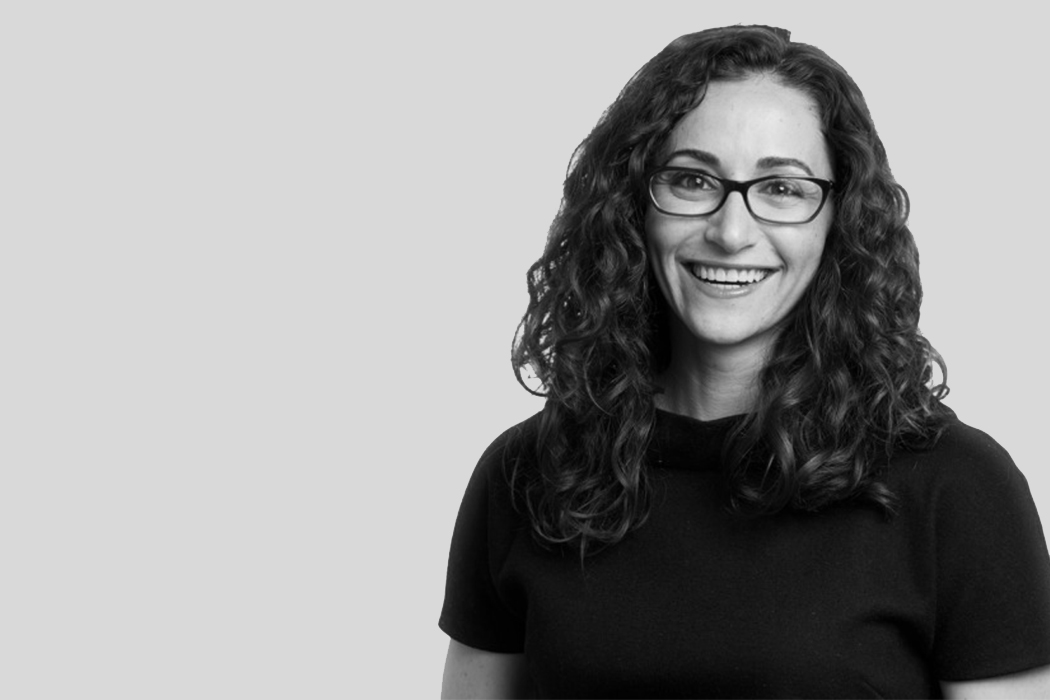
INTERVIEW: JULIE GRANT
Brand, Influence, and Incubation of Life Science Startups
Canaan's health-centric GP shares her insights on the firm's unique approach to building brands.
A conversation with Julie Grant of Canaan
Welcome to the latest edition of M*A*S*H* (Marketing Advice for Startups in Healthcare), VSC’s ongoing series of conversations with executives, investors, and entrepreneurs sharing their wisdom and experience. Today we’re speaking with Julie Grant, General Partner with Canaan, and Co-Founder and CEO of Day One Biopharmaceuticals. She invests in early-stage biopharma and digital health ventures and leads new company formation efforts as an executive. Julie previously worked at Genentech across development and commercial divisions and also served on the board of the Biden Cancer Initiative and co-chaired Planned Parenthood NorCal’s IT Advisory Board. She holds an M.B.A. from Stanford and an MPhil. in BioScience Enterprise from Cambridge. She has also received a B.S. in Molecular Biophysics and Biochemistry from Yale. We sat down with Julie for an illuminating conversation on Canaan’s unique approach to company-building as well as the role of brand and influence.
"Even with highly technical medical products, it is critical to remember that there's a human making the purchasing decision."
How did you get into investing? Tell us about your journey. I grew up in Chicago, and both of my parents worked in consumer advertising. I can't say that I got a lot of exposure to the venture capital industry until I moved out to the Bay Area to take a job at Genentech in 2006. That was my first role in the industry. During that period, Roche bought Genentech and I ended up meeting Canaan in anticipation of when I thought I was going to be let go in a reduction in force resulting from the merger. I ended up staying and it ended up being a great opportunity for me to stay at Genentech. Investors at Canaan and I stayed in touch and four years later I joined them as an associate after business school. In the seven years since, I worked my way up to Principal, Partner, and then General Partner on the healthcare team.Are there any lessons you learned from your parents who were in advertising and has it shaped your career or strategy?I think really great marketers and advertisers understand the clarity of product-market fit and messaging. That's how a lot of startup companies raise money, but also how they think about finding the right home for their product or the right positioning for their company. Even with highly technical medical products, it is critical to remember that there's a human making the purchasing decision. This was ingrained in me by my parents.
"With life science in particular, your positioning can change as your data changes. It can change as the competition and understanding of other therapeutics and different diseases change."
Do you favor companies that already understand how to tell a story or do you assume that that's just not something some of these companies understand and that's okay, they'll eventually get it?We're doing a lot of company formation work here at Canaan. We're actually in the driver's seat of trying to help determine that positioning with a scientist or with a technical founder. So we think of ourselves as partners who are able to help hone that positioning over time. With life science in particular, your positioning can change as your data changes. It can change as the competition and understanding of other therapeutics and different diseases change.Companies have to evolve their positioning in the life science sector. Our hope is that we have a thesis of differentiation that is really the foundation. For a team that has real expertise that could be a scientific insight, or a new type of platform to develop new drugs. It could be a single asset that has the potential to change human health in a really new way. But we start with differentiation at the core and then the second factor is capability.You have to be able to credibly own that space. We may not talk about it in terms of branding all the time in the life science sector. For example, when you talk to a Howard Hughes Medical Institute investigator about their specific field they are strikingly fluent and sophisticated in their thoughts. Their brand is a big part of the company's brand. In the life science sector - we’re actually in the pharmaceutical sector - we’re very much aware of brand. Nature, Cell, Science have brands as publications. The Nobel Laureates are affiliated with a brand. The conferences where we announce data have a brand and stature is associated with what forum you are invited to speak at. We just don't talk about it in marketing terms all the time.
"Our hope is that we have a thesis of differentiation that is really the foundation. For a team that has real expertise that could be a scientific insight, or a new type of platform to develop new drugs. It could be a single asset that has the potential to change human health in a really new way. But we start with differentiation at the core and then the second factor is capability."
Ok, so what is the right time for startups to engage with the scientific advisory community? Is there a template in your mind about when you do it and how you do it?Very early. It’s a day zero activity. Your scientific premise and hypothesis need to stand up to alternative use and rigor. There is an expectation with the historical norm of peer review, that one will have other people evaluate their work. When we execute due diligence we hire experts to help us evaluate the data. Not just the outcomes of the data, but how the data was generated.There will be a lot of granular questions about the source of the data. How others may have different interpretations of the data. Your credibility and the quality of your network are extraordinarily important.How important is it that companies are based in areas like Boston or the Bay Area where this scientific community has a lot of density. Does that factor into your evaluation process?I think it makes it easier to scale. It offers the company more options to secure top tier talent. That's really what it's about. There's a density of talent that allows you to recruit really great people and also to relocate people. If there’s just one biotech company in a town in the Midwest, and the company goes sideways, or isn't a good cultural fit, what happens? That's hard because we realized that generally, we’re employing older employees, often who have children and may have dependents. The stability of being able to keep your family put while having lots of career options is incredibly important for people.That's part of the dynamic, the presence of an existing talent pool. We actually find that there's a lot of really great science that's happening all over the country. I think it's just ensuring that there's enough operational talent to staff the pharmaceutical company.
"VCs essentially help build the business plan, the operational plan, hire all of the employees, license the IP from the company, and, in many cases, raise the money in a syndicated round."
There's sort of a co-founding model you're working on, which is different from the traditional model of just investing in seed series A. Tell me more about that model you're working on?It’s actually very common for venture funds to incubate new companies in biotech. It’s a vehicle for scientific innovation out of universities or large pharma to be paired with teams and talent to build a company from the ground up. VCs essentially help build the business plan, the operational plan, hire all of the employees, license the IP from the company, and, in many cases, raise the money in a syndicated round.There is an entire ecosystem of venture incubated deals actually. It's a large percentage of the life science pharmaceutical companies that are built and funded each year that are under the umbrella of a venture fund. That provides a lot of certainty for an academic inventor or a pharmaceutical company that's looking to spin a pipeline program out into a newco. Funds will have a higher likelihood of moving forward because they've de-risked the question of capital.In August of last year, you had a couple of great exits and you have one company currently. How much bandwidth can you as an investor take on in terms of forming companies individually?It's a good question. I think teaming up with a great entrepreneur is important. I personally only feel comfortable about being an interim CEO with one company at a time. I try to sequence my incubation efforts as a result. Of the two incubations that I've done over the last three years one has not yet been announced - the other is Day One Biopharmaceuticals - but it is an effort. You can take on more than one if you have someone who's ramping into the executive roles. But running a company can take a lot of your time. It ebbs and flows, based upon how rapidly you're hiring or the intensity of the activities at a given point in time.I think that's part of the reason why venture funds have Entrepreneurs in Residence (EIR). They will take that position from an operational view and pair up with an investor at the fund. They'll team up to really drive it forward. So that's part of the reason why you see so many EIRs of different names: venture partners, executives in residence, scientists in residence at venture funds. It's not just to evaluate and due diligence, it's actually to build companies. It's really rewarding work.What has COVID-19 done to the way you look at your daily company-building life?It changed two-three main pillars in my role. I’m the director of a number of pharmaceutical companies, pre-clinical and clinical. We’re talking more frequently than I have ever spoken to them about a host of logistical issues. Also about how to share best practices as fast as possible so that people can implement and move on because there’s just so much to digest.I’m trying to be a filter to help make decisions faster because management are on the front line. They are doing a heroic effort trying to keep things moving. I’m in that seat currently and my directors and my firm have been helping me. I’m the CEO of a pharmaceutical company with about 20 people. We’re in a clinical-stage program and we are working with hospitals and doctors to try and keep products in patient’s hands. We are working with distributors to ship drugs directly to patients, to their homes, when normally it’s dispensed to the hospital.Then behind the scenes we are talking to companies that had to finance. They had to do a risk assessment to think about their runway and burn when we don’t know what the impact of COVID-19 will be in the second half of 2020 and into 2022. We have virologists in our network so we can talk to people about interpreting data and making the best guess. But the truth is we don’t know what’s going to happen. The government policies on a local, state, and national basis are changing at a very quick pace. So we’re trying to digest that quickly for our companies and help them make sense of the world. We are all going to make the best decisions we can in the context of the tremendous amount of present uncertainty.
"I think that's part of the reason why venture funds have Entrepreneurs in Residence (EIR). They will take that position from an operational view and pair up with an investor at the fund... It's not just to evaluate and due diligence, it's actually to build companies. It's really rewarding work."
The next question is more about working with the government and the FDA. It’s clear that they’re making some adjustments on different things. Any learning through all the companies in earlier stages, in middle stages about navigating the government entities in these pandemic times? I think that the FDA is doing an amazing job. They are open for business and they are talking to companies across a range of therapeutic areas to keep things moving forward. The FDA’s job is not just to approve treatments, it’s to keep people safe. They have to have time to think. I think the fact that they’re moving so quickly is actually tremendous.I would highly recommend to companies that are thinking about approaching the FDA right now to ensure that you have a really strong regulatory expert to help you with your filings, guidance, and which path to pursue. To engage with the agency, as well as to think about which geographies to pursue. One of the complexities we are dealing with in the industry are micro-COVID outbreaks and the experience of treating patients with different indications and different realities.This is a moment to be highly strategic, keep your company moving forward. A lot of companies are actually accelerating their plans in these environments. Others, unfortunately, are stuck and are shut down. It’s very case-by-case specific.When you talk about some of the regulatory experts, what does that look like? Is it individual consultants, or are they agencies?It depends on what you are trying to accomplish. If you are aiming to file a new drug application, Type B interaction, breakthrough designation, or an IND (Investigational New Drug), you really need to have people who understand how to create those documents. They need to know how to go through the choreography of filings with the FDA, to submit a robust package. Those people are regulatory scientists, strategists, and affairs professionals. They have probably done this for 20 years and have dozens of fillings under their belts. Those are often consultants or you hire them full time on your team.They are equally as important in terms of expertise as someone who’s an additional chemist or a physician. It is a profession and you pay for quality and it’s worth it. It’s definitely worth it. For the NIH or NIDA, it’s a very different path, it’s a different set of relationships.Is there a strategy to try to get things approved in other countries just because of different regulatory speed, and then come to America? Or do it in another country then get funding because you’ve proven something out, or is it America where it matters first? How has that changed with COVID?It’s changing pretty rapidly and it does matter by segment. You’ll often see first human health volunteer studies completed in Australia. It’s easy to start studies rapidly there. They have an incentive program to bring pharmaceutical products to Australia. The FDA is becoming increasingly versatile at accepting studies that have truly a global footprint or the majority of the patients aren’t necessarily American. I think that’s the right thing to do because, frankly, America is a melting pot anyway. If we increase the diversity of patients, that’s a positive to understanding human health. But for different sectors like medical devices, Germany and other countries in Europe are often the first market where they are approved.It is indication and product-specific and I would say the regulatory authorities globally are really quite versatile at accepting data from other jurisdictions. It’s becoming an increasingly global market for clinical data. I think that’s a positive thing overall to bring the product to the market faster. Companies will think about de-risking by diversifying geography. Regulatory agencies have provided an expansion and loosening of guidance in these extraordinary times. We’ll see if it returns to normal or if it’s going to give what is considered an excursion from the protocol. We’ll see how that impacts statistics.I think that we have a lot to learn. In particular, I’m interested to see how the evolution of clinical trial implementation could change. Hopefully, we’ll allow patients to do more without having to come into a hospital, reducing friction for patients to participate in trials. It’s a necessary part for us to have vigorous evidence-based medicine. We need people to participate for us to understand what works.A big thank you to Julie for so generously sharing his expertise and knowledge. You can connect with Julie on Twitter and LinkedIn to keep up with her latest activities. If you enjoyed this edition of M*A*S*H*, be sure to check out our interview with Gaurav Agarwal, a marketing veteran and startup advisor who shared his thoughts on devising a $1 million marketing budget, common startup marketing mistakes, and much more.