INTERVIEW: URSHEET PARIKH
Life Sciences and Biotech Company Building
His thoughts on investing, what he looks for in a founder, and the impact marketing can have on a healthcare startup.
A conversation with Ursheet Parikh of Mayfield
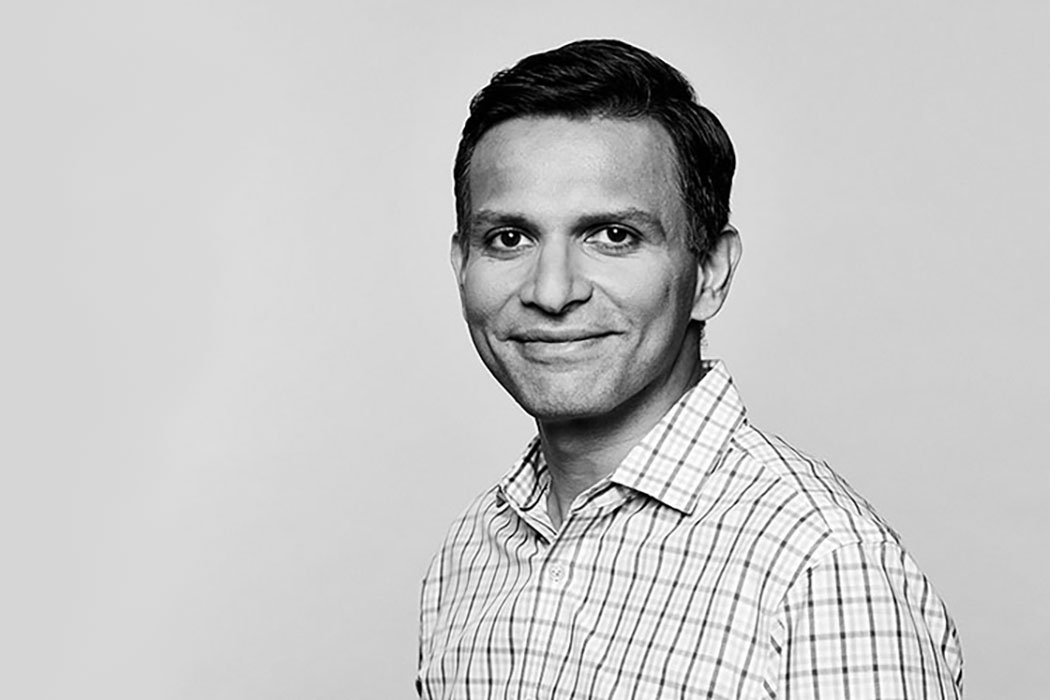
In this edition of M*A*S*H* (Marketing Advice for Startups in Healthcare) we’re speaking with Ursheet Parikh, Partner at Mayfield Fund. Prior to joining Mayfield in 2013, he was a co-founder & CEO of StorSimple and then a GM at Microsoft. Ursheet holds an MBA from the Wharton School and a Bachelor’s in Computer Science from the Indian Institute of Technology in Mumbai, from which he received the Young Alumni Achiever award in 2015. We sat down with Ursheet to get his thoughts on investing, what he looks for in a founder, the impact marketing can have on a healthcare startup, and much more.Tell us about your journey to becoming an investor:I came to Silicon Valley because I believed that if you wanted to change the world, you did it with a company. And this was a place where your ideas could be funded, no matter how crazy they were -- as long as you could execute them. I was a part of several companies that failed before joining a team that was acquired by Cisco, where I was able to build a business from concept to $100M. Then around 2008, I went on to co-found StorSimple as the CEO, which was acquired by Microsoft. That was one of the first cloud acquisitions in the early days of cloud computing, and it became a significant amount of Azure’s revenue at the time. After that, I tried to figure out what I was going to do with the rest of my life. I loved the full product life cycle, and I felt I was ready to move from being the quarterback to being the coach, helping others realize their ideas. So I started investing in core deep-tech enterprise IT, and over time I felt there was an opportunity to fundamentally impact healthcare and engineering biology. I didn’t know much about healthcare then, so it’s been a five-year learning journey, with an amazing set of people in this ecosystem.
You have to believe that you can out-execute competition, and will need the confidence to communicate your vision to the world so the best talent and investors in the world can find you.
That seems like a big break from enterprise to healthcare. What was driving that evolution?For many people who dedicate themselves to working in healthcare, you’ll find there is a personal experience driving their decision.I had developed some health complications back in 2013, and the healthcare system was treating me like one of a million cases. That experience got me thinking about the intractable problems faced by the health system, and it became clear that computational biology would have a massive impact there, apart from AI. That same year, I found myself at Mayfield, one of the seminal birth funds of biotech with companies like Genentech, Amgen, Applied Biosystems, and others. It was also the biggest entrepreneurial opportunity of all time. In the 70s and 80s, entrepreneurs and investors were building companies to last - not to be acquired. By the 90s, the advent of the PC and the internet had accelerated innovation. At the same time, biotech investing became about outsourced R&D and build-to-sell.In the past decade, the digitization of biology has created another digital transformation of healthcare. The cost to sequence biology, for example, has gone from $1B per person to $1K per person and is tracking to $100. All of this newly quantifiable biological information can now be applied to cloud technology, machine learning, and so on. In parallel, the biology space itself has developed an incredible set of engineering technologies in the past eight years. CRISPR editing, DNA printing, biomanufacturing, and cell engineering have become powerful building blocks. Suddenly, to start a biotech company, you no longer need $10M. With $100k, you can lease out a bench in an accelerator and be in business. 2019 was a seminal year for this shift. Impossible Foods has brought engineering biology to planetary health and the food supply chain. Adaptive Bio and 10x Genomics are building platform biology companies for human health. It has become clear that investing in these companies needs to follow the built-to-last model. These products need to solve tough problems and change lives, they need to find a way of building a scalable commercial model to bring the business to hundreds of millions in revenue for >10 years, and they need to start a movement to enable change in an ecosystem.
But it’s never too early to start applying a marketing mindset to category leadership, building a movement, and attracting amazing people to your company. If you want to create a company that’s going to excel, you need to excel at communications as well.
Do you think having so many new sources of venture capital in the biotech ecosystem is good or bad for the industry?When I look at the traditional biotech investing model - funds like Third Rock, Arch, and Atlas Ventures - these firms have done a phenomenal job and are by far the best venture incubators out there for outsourced R&D and creating returns.Companies that started in these venture incubators have actually created drugs in the market, and the top tier investors have created returns for their LPs as well. That approach is working well, with several $10 billion acquisitions, and that is attracting a whole new flood of investors that want in.However, when you have different types of investors in an ecosystem, it’s essential that you bring on the right stakeholders, those that will align with your mission and goals for the duration. On the one hand, you have a set of funds that are looking to exit in three to five years. On the other, you’re looking at a seven to ten-year relationship, but are expecting to create a multibillion-dollar company. If you’re not aligned on the time commitment, you won’t have the right decision-making dynamic, and you won’t have the right prioritization.When we’ve worked together, what has stood out to me is that you bring a marketing mindset to managing your companies. What is your passion for the value of storytelling and how is it reflected in the advice you give to your companies?If you’re building a technology to sell as an asset, you don’t need to care as much about marketing. But, if you’re trying to build a platform company in a category, you need to make sure you’re building the best IP, assembling the best team, attracting the best investors, and selling the best product. To achieve that, you can’t also be a best-kept secret. You have to believe that you can out-execute competition, and will need the confidence to communicate your vision to the world so the best talent and investors in the world can find you.One of the questions that every entrepreneur needs to consider as they’re building a built-to-last or standalone company is, “what is the category of company we’re creating, and are we emerging as a leader in this category?” That’s where marketing comes in. Done right, it will create non-linear outcomes.
Ninety-eight percent of the time, when it comes to product marketing, a scientist or an engineer will do a better job than most marketers out there. But when you find the top 1% marketeer, they’ll put your company in a non-linear zone and create acceleration.
It takes a lot of money to grow in this world, and storytelling is a powerful tool to attract investors. How do you help founders think about how much to budget for marketing?You need to start by getting the core of your offering right. Once you have that, I find that most companies underinvest in marketing and sales. That is because the people who build new products and companies don’t often come from a marketing background. They’re scientists, engineers, and technical managers, who don’t have a natural tendency to beat their chests.But it’s never too early to start applying a marketing mindset to category leadership, building a movement, and attracting amazing people to your company. If you want to create a company that’s going to excel, you need to excel at communications as well. To build a great company, you should find what you’re going to be great at, then find people who are going to be great at everything else. So instead of hiring your 30th scientist or engineer, founders may want to consider who is the right marketing partner. Ninety-eight percent of the time, when it comes to product marketing, a scientist or an engineer will do a better job than most marketers out there. But when you find the top 1% marketeer, they’ll put your company in a non-linear zone and create acceleration.Mayfield has a track record of working with second- and third-time founders. How do you determine the importance of a founder with experience versus first-time founders, which historically have great outcomes of their own.Two-thirds of the investments we make are with first-time founders, and one-third are repeat founders. There is no fixed formula, but there are entrepreneurial characteristics that define a successful leader.Being a continuous learner is critical. Even if someone sold their last company for $10B - if they feel that they know it all, they’re probably not going to be an amazing founder. If someone’s a first-time founder, there’s not a long track record that we can evaluate. So when I’m looking at a founder, I want to assess if they’re able to create a movement compelling enough to convince the best people to be advisors, board members, etc. Are they solving a hard problem, with a hard to replicate solution? Is the science already proven out and it’s now about building the product? Are they committed to understanding who their user is, and how they’re going to address an essential need? Are they demonstrating an understanding of what it takes to get paid through a complex ecosystem? What are their core values driving them to build the company?In a given year, we’ll meet with hundreds of companies for every one investment, so this is not a transaction - it’s a 7-10 year relationship. A lot of first-time founders will only talk to investors when they need to raise capital. A good time to talk to a series-A investor is actually right after raising a seed round -- this will help you understand what we’ll be looking for at the A.
A good time to talk to a series-A investor is actually right after raising a seed round -- this will help you understand what we’ll be looking for at the A.
We’re in the business of influence - trying to help our companies best position themselves. What influences you? What does your consumption diet look like?I learn from entrepreneurs. Every day, I believe that the people walking in the door are smart, motivated, and focused. The highest learning happens when I’m engaged in conversations with other amazingly smart people.Besides entrepreneurs, we have a health innovator network that has >500 people in the health / biopharma space, which we can call on for advice. I do a lot of one-on-ones with other investors and academics and participate in board meetings. I truly feel blessed to be in a place where the more I learn, the less I know, because I’m always talking to someone who’s expanding my horizon.In terms of social networking, I have a LinkedIn profile, and that’s it. My Twitter account is dead as a doorknob, and I can’t remember the last time I logged in to Facebook.Do you think there are lasting companies that will emerge from solving the COVID challenge?COVID is a wave. If you can ride the wave, it can be awesome for you. Otherwise, it will be a tsunami.There’s a lot of COVID-washing going on right now in the ecosystem. I’m optimistic that 24 months from now, we’ll have a handle on this epidemic, so a company expressly created for that will probably not be a lasting company. There is a subset of companies already running that have core ingredients that will see significant uplift from the accelerated approval paths and refocusing on infectious diseases.The lasting impact will really be the behavioral change among consumers and institutions. There’s no reason that telehealth shouldn’t have been the first path to healthcare before this - but there wasn’t the momentum. There’s no reason that diagnostic technologies should have required the same long road to market as therapeutics. Now, accelerated approval paths are changing the fundamental economics of building a diagnostics company.*** If you enjoyed this edition of M*A*S*H*, be sure to check out our interview with Gaurav Agarwal, a marketing veteran and startup advisor who shared his thoughts on devising a $1 million marketing budget, common startup marketing mistakes, and much more.